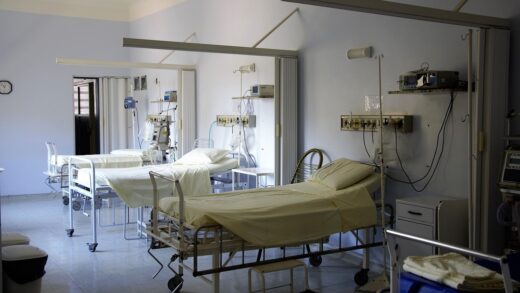
These presentations, prepared by Prof. Christophe Duwig provide a multidisciplinary strategy for addressing global environmental and social challenges. The material defines sustainability through the Brundtland Report and distinguishes between „weak” and „strong” sustainability, emphasizing that global economic stability relies heavily on healthy ecosystems. By utilizing frameworks like the nine planetary boundaries and Doughnut Economics, the course illustrates the necessity of keeping human activity within a safe operating space that respects both ecological ceilings and social foundations.The series further examines high-impact sectors, such as fashion and healthcare, noting that healthcare alone contributes roughly 5% of global greenhouse gas emissions. A significant portion of this footprint resides in Scope 3 emissions, which cover the complex supply chains of pharmaceuticals and medical equipment. To mitigate these impacts, the presentations advocate for a shift from linear resource use to a circular economy via the RESOLVE model and new European transparency regulations. Ultimately, the work calls for urgent engineering innovation and systemic change to achieve a net-zero, equitable society by 2050.
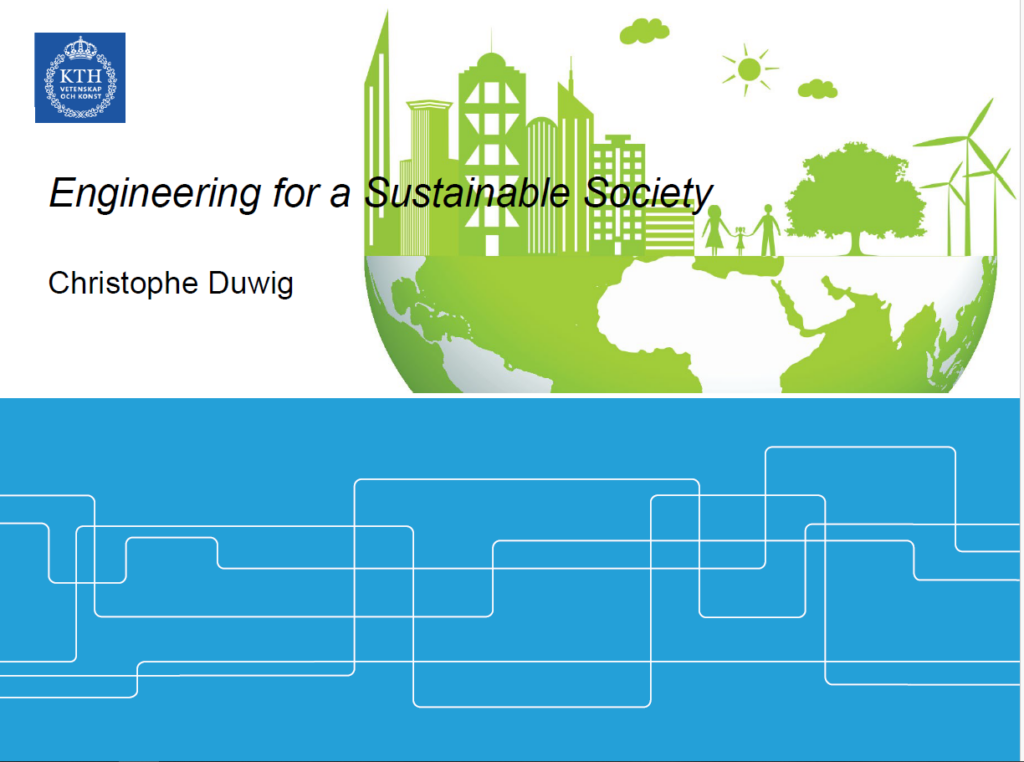
All presentations are available in PDF format. Click an image above to begin your download.
The graphics accompanying this post were generated using artificial intelligence tools.