Denise D’Elia 12, Elena Reigadas 1234, Jesús Guinea 1234, Itsaso Artetxe Aldape 5, José Luis Cantarero Ruiz 5, Emilio Bouza 1234, Patricia Muñoz 1234
- Clinical Microbiology and Infectious Diseases Department, Hospital General Universitario Gregorio Marañón, Madrid, Spain
- Instituto de Investigación Sanitaria Hospital Gregorio Marañón (IiSGM), Madrid, Spain
- Medicine Department, School of Medicine, Universidad Complutense de Madrid, Madrid, Spain
- CIBER Enfermedades Respiratorias-CIBERES (CB06/06/0058), Madrid, Spain
- Engineering Service, Hospital General Universitario Gregorio Marañón, Madrid, Spain
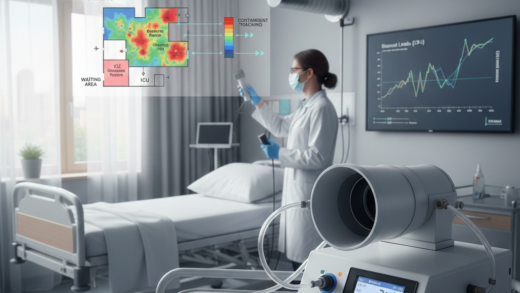
Regarding air quality, modern hospitals include both “protected” and “unprotected” areas. Although recommendations exist for maintaining good air quality in protected zones, guidance for unprotected areas remains limited. This gap poses a significant risk, particularly for immunocompromised patients, who are more susceptible to acquiring potentially life-threatening healthcare-associated infections (HAIs) transmitted through the air in these settings. This paper aims to review existing evidence on indoor air quality in unprotected (IAQ-U) hospital areas and identify current knowledge gaps. Additionally, some proposals for assessing and maintaining optimal indoor air quality (IAQ) in these settings are presented.
A narrative review of the literature on IAQ was conducted, covering the period from 2015 to 2025, and selected available recommendations on IAQ in the healthcare setting were examined. The paper is structured in two sections. The first section reviews the existing evidence on IAQ, while the second presents perspectives and proposals. Specifically, the European Society of Clinical Microbiology and Infectious Diseases (ESCMID) could coordinate a pilot multi-centre study among selected European hospitals to develop guidelines for assessing IAQ-U hospital areas. Implementation of these proposals could reduce the incidence and associated costs of air-transmitted HAIs and strengthen preparedness for future pandemics.
Link to the paper: https://doi.org/10.1016/j.jhin.2026.07.016