Jixuan Bao1*, Risto Kosonen1, Simo Kilpeläinen1, Kim Hagström2 and Jukka Vasara3
1 Department of Energy and Mechanical Engineering, Aalto University, Finland
2 Halton Oy, Finland
3 Granlund Oy, Finland
* Corresponding author: jixuan.bao@aalto.fi
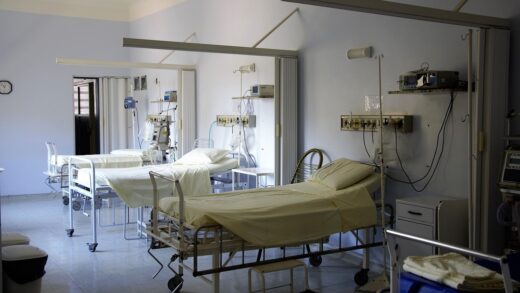
Healthcare-associated infections have increased across European hospitals in recent years, raising attention to indoor air quality in healthcare environments. This chamber study investigates strategies to reduce airborne infection risk between patients and healthcare staff in a simulated double-bed patient room by examining the effects of heat gain, airflow rate, air distribution, infector location, and curtain position. Three air distribution methods were evaluated: mixing ventilation (MV), occupant-targeted ventilation (OTV), and wall attachment ventilation (ATT). Virus-laden aerosols were simulated using sulfur hexafluoride (SF6) released from a thermal breathing manikin. When the infector was a patient, ATT maintained lower mean concentrations than MV at 40 L/s, whereas the performance of OTV was limited on the near-field side due to spatial constraints. The average contaminant removal effectiveness (CRE) with ATT on the infected side was 42.7% higher than that with MV at 17 W/m² and 80 L/s. However, ATT was sensitive to diffuser location, with the lowest CRE observed on the exposed side. When the infector was a staff member, notable concentration fluctuations were observed with ATT on the near-field side, whereas OTV significantly improved dilution effectiveness at 80 L/s. Increasing airflow from 40 L/s to 80 L/s reduced infection probability in the exposed area, with 8 of 12 tests achieving ≥50.0% reduction across the different ventilation configurations. Overall, the findings support the optimized selection of local air distribution systems for practical application and provide insights into improving microenvironmental safety in complex healthcare scenarios.
Link to the paper: https://doi.org/10.1016/j.buildenv.2026.114828